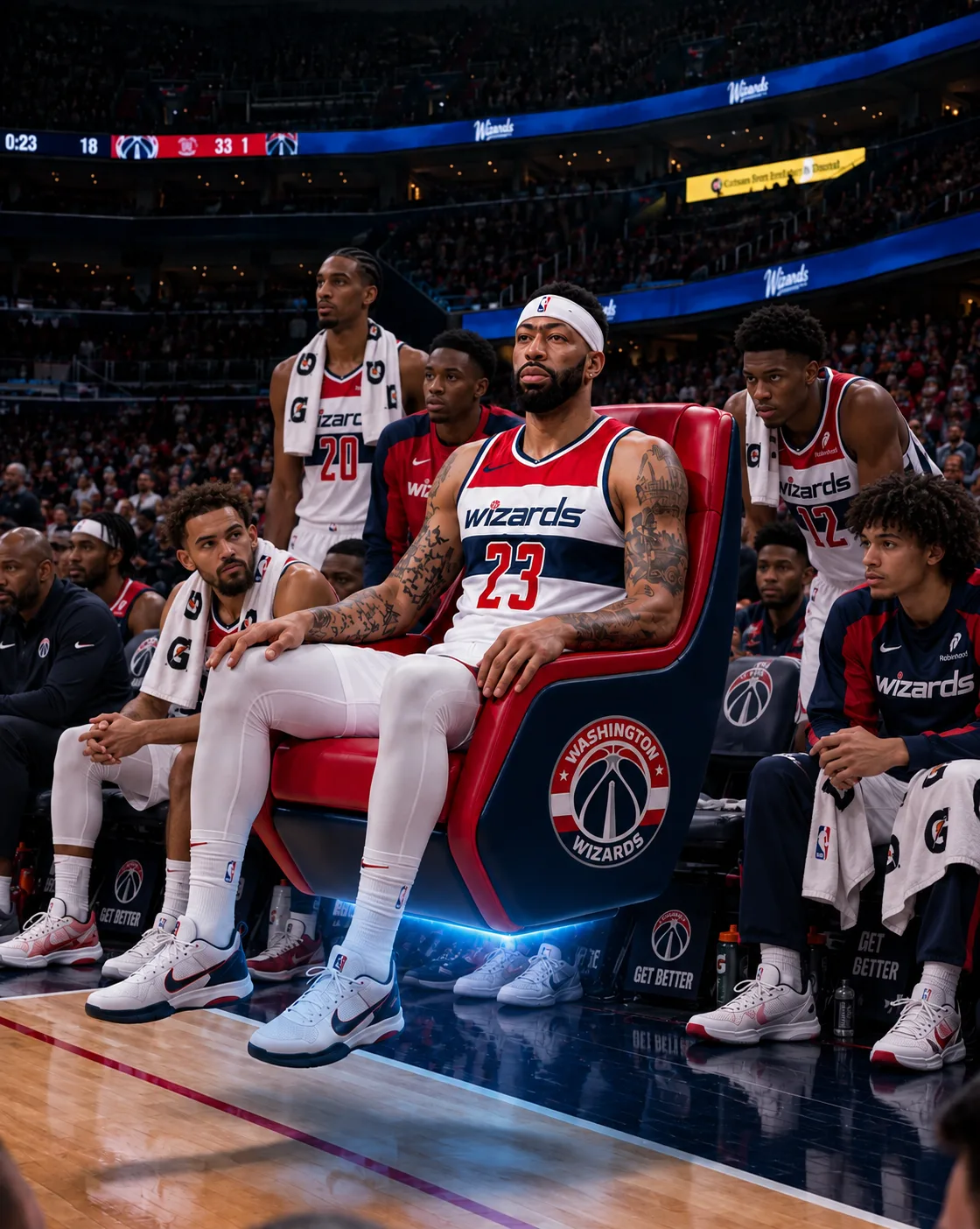
WASHINGTON — In a development team officials described as a major step forward in athlete preservation, the Washington Wizards on Sunday unveiled a new courtside stasis system designed to keep Anthony Davis physically available by sharply limiting his exposure to basketball.
The chair, developed internally with assistance from the club’s medical and performance departments, allows Davis to remain fully dressed, visible to teammates and technically present for games while avoiding many activities historically associated with injury, including sprinting, landing, lateral movement, contact and standing for extended periods.
“The early data are extremely encouraging,” a team official said. “During controlled testing, Anthony experienced zero basketball-related injuries while completely immobilized.”
Washington said the system uses orthopedic support, temperature regulation and a low-intensity blue illumination package that team engineers said provides no known medical benefit but “significantly improves stakeholder confidence.”
Under the initial protocol, Davis will be permitted to participate in film sessions, pregame introductions and selected verbal defensive coverages. Basketball operations staff will gradually evaluate whether his workload can be expanded to include standing during timeouts, clapping after made three-pointers and, if benchmarks are met, one unrestricted walk toward the scorer’s table.
The Wizards stressed that Davis is not currently injured and that the program is preventative. Team doctors said this distinction was important because traditional injury management had required the presence of an injury, while the stasis model seeks to address the period immediately before one.
League officials are reportedly monitoring the program but do not believe the chair violates existing load-management rules, noting that Davis remains in full view of fans and can be activated at any time in the event of what one source called “an organizational emergency of sufficient magnitude.”
Washington has not disclosed the cost of the unit. One team source said future versions could include a cup holder, biometric monitoring and a protective canopy for road games.